The Indian tea export process runs through five stages once an order is confirmed: grading and quality verification, lab testing, documentation preparation, freight booking, and dispatch with tracking. Most delays happen at the documentation stage, not the physical shipping — which is why confirming paperwork requirements before an order ships matters more than most buyers expect.
Table of Contents
Quick Answer: The India Tea Export Process

The India tea export process runs through five stages once an order is confirmed: grading and quality verification, lab testing, documentation preparation, freight booking, and dispatch with tracking. Most delays happen at the documentation stage rather than the physical shipping, which is why confirming paperwork requirements early matters most.
Stage 1: Grading & Quality Verification
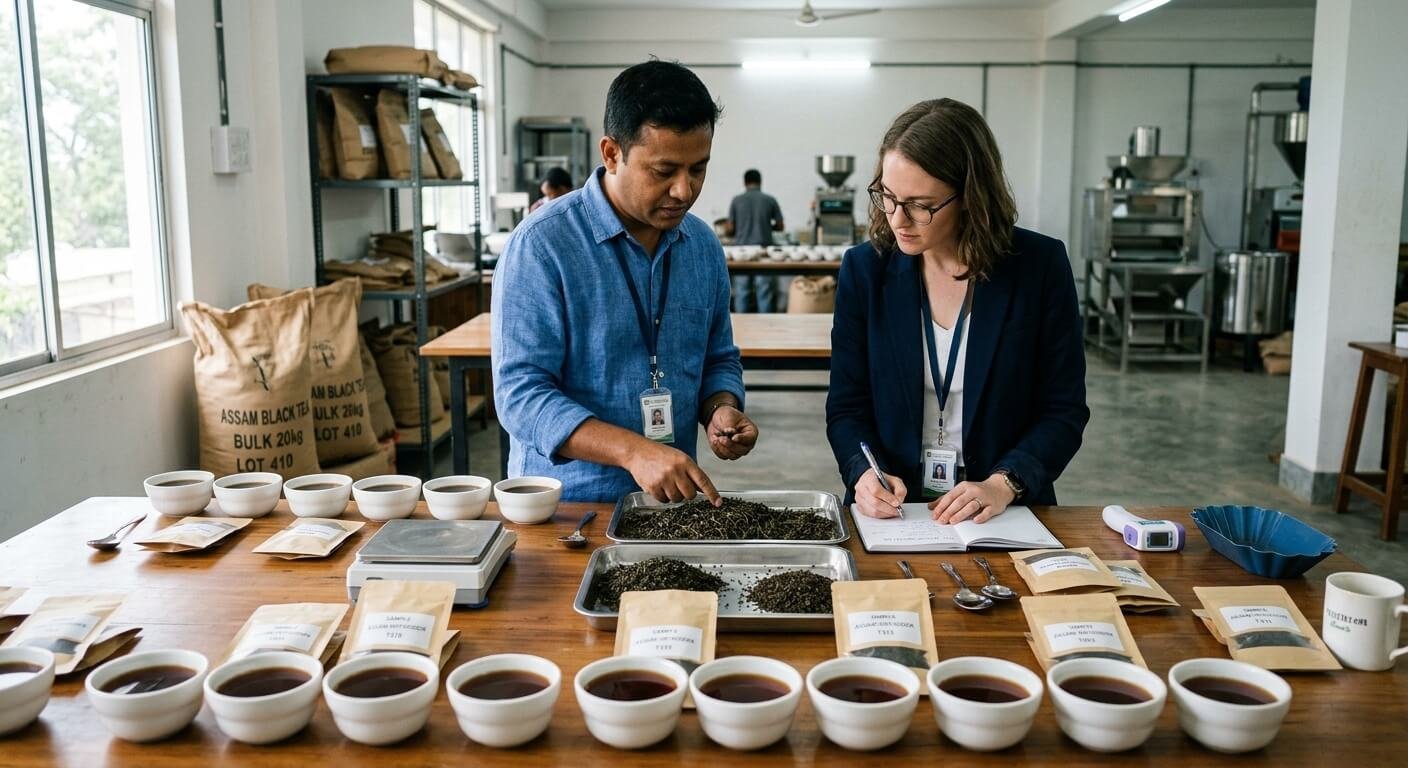
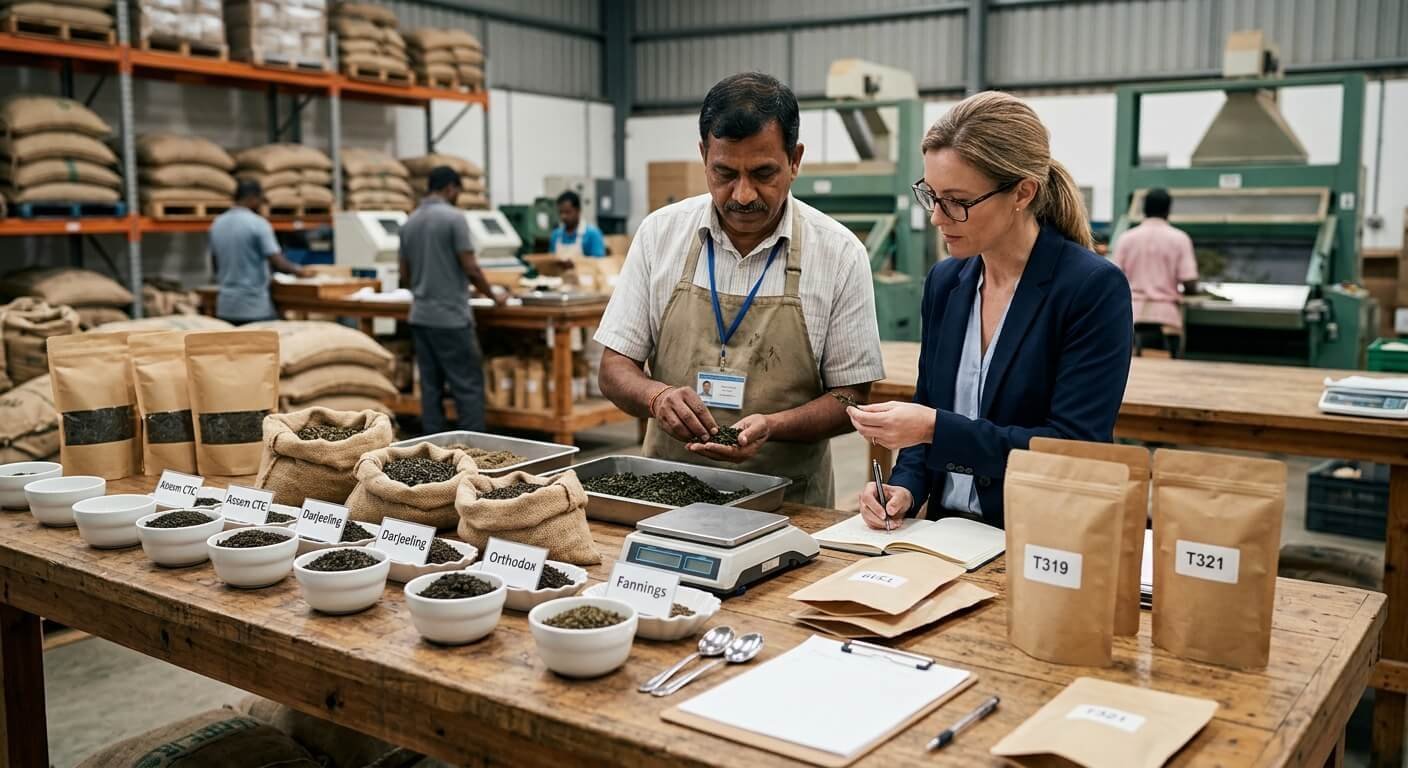
Once a buyer confirms volume and specification, the tea batch gets graded against the agreed standard — Orthodox or CTC, by leaf size and quality tier. This is checked against the sample lot the buyer originally approved, so what ships matches what was evaluated, not a substitute batch.
Stage 2: Lab Testing
A representative sample from the batch goes to a third-party lab — Eurofins or SGS are the internationally recognised names — for residue testing. This is what produces the pesticide-residue report buyers in the US, EU, and Canada need to confirm the shipment meets their market’s Maximum Residue Limits. Testing is done per batch, not once for a supplier’s whole catalogue, since residue levels can vary lot to lot.
Stage 3: Documentation Preparation
With grading and lab results confirmed, the paperwork gets assembled:
- Certificate of origin — confirms the tea’s region and country of production.
- Grading report — matches the shipped batch to the agreed grade.
- Lab report — the residue test result from Stage 2.
- Phytosanitary certificate — required by most destination markets to confirm the shipment is free of regulated pests or plant disease.
- Export documentation — including correct HS classification (tea sits under HS heading 0902, with the specific subheading depending on tea type and destination tariff schedule).
On the Indian side, the exporting supplier needs a valid Tea Board of India licence and an Importer Exporter Code (IEC) to legally export — both are baseline registrations, not optional paperwork.
Stage 4: Freight Booking
Shipping method and route get confirmed based on volume, timeline, and destination — container loads for larger orders, consolidated freight for smaller ones. This is also where realistic transit time gets set, so a buyer isn’t caught off guard by a shipping window that was never accurate to begin with.
Stage 5: Dispatch & Tracking
The shipment goes out with all documentation attached, and tracking information gets relayed to the buyer. From here, customs clearance at the destination port is handled by the buyer’s customs broker and the destination country’s authorities — no exporter can guarantee clearance on the receiving end. What a reliable exporter controls is everything upstream: accurate grading, verified lab testing, and complete documentation, which is what most clearance issues actually come down to.
Where Delays Actually Happen
Rarely in the physical shipping. Almost always in incomplete or mismatched documentation — a certificate that doesn’t match the batch, an HS code that doesn’t match the tea type, or a lab report that’s aged out of relevance for a market with strict freshness requirements on testing. Buyers who confirm documentation requirements before an order ships, not after it’s already in transit, avoid nearly all of this.
CBIC manages customs classification and duties, while APEDA oversees export registration and documentation for agricultural products including tea.
Frequently Asked Questions
How long does the full export process take, start to finish?
It depends on grading complexity, lab turnaround, and freight availability — ask your supplier for a realistic estimate once your specific order and destination are confirmed, rather than relying on a generic timeline.
Who is responsible if a shipment gets held at customs?
Customs clearance decisions sit with the destination country’s authorities. A supplier’s role is to provide accurate, complete documentation — which is what prevents most clearance issues in the first place.
Is lab testing required for every shipment?
For export to markets enforcing Maximum Residue Limits — the US, EU, and Canada in particular — yes, a per-batch lab report is standard practice, not optional.
To talk through volume, grading, and documentation for your own order, see how Ricwell’s wholesale and bulk tea supply works, or read our complete guide to importing tea from India.
Related Reading
- MRL & Pesticide Limits: A Compliance Guide for Tea Importers
- Tea Grading Explained: Orthodox vs. CTC
Ready to Launch or Scale Your Tea Brand?
Ricwell handles direct Darjeeling garden sourcing, retail-ready blending, custom packaging, and FSSAI/export compliance under your own brand name from 5kg low MOQs.