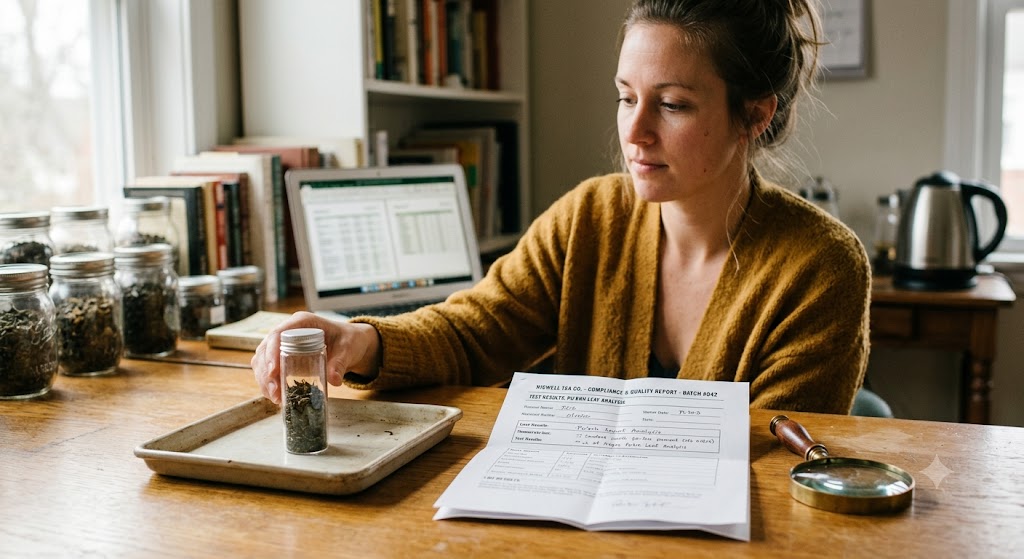
Importing tea from India means selecting a supplier who can grade and document your shipment correctly, confirming the correct HS classification for customs, securing certificate of origin and phytosanitary paperwork, and meeting the Maximum Residue Limits (MRLs) your destination market enforces. None of these steps are unusual by import standards — shipments get held up mainly when a supplier can’t produce documentation on request, not because the process itself is complicated.
Table of Contents
Quick Answer: How to Import Tea From India
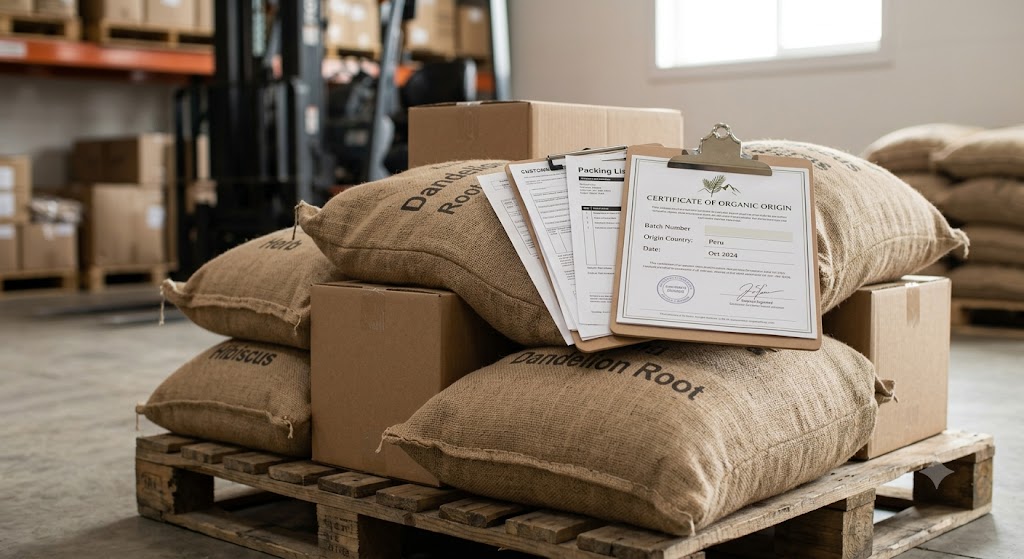
To import tea from India, confirm the correct HS classification with customs, secure a certificate of origin and phytosanitary documentation, and verify the shipment meets your destination market’s Maximum Residue Limits. Working with a supplier who already grades and documents batches correctly removes most of the friction in this process.
This guide covers what to check before you commit to a supplier, order, or container.
Why India, and What You’re Actually Buying
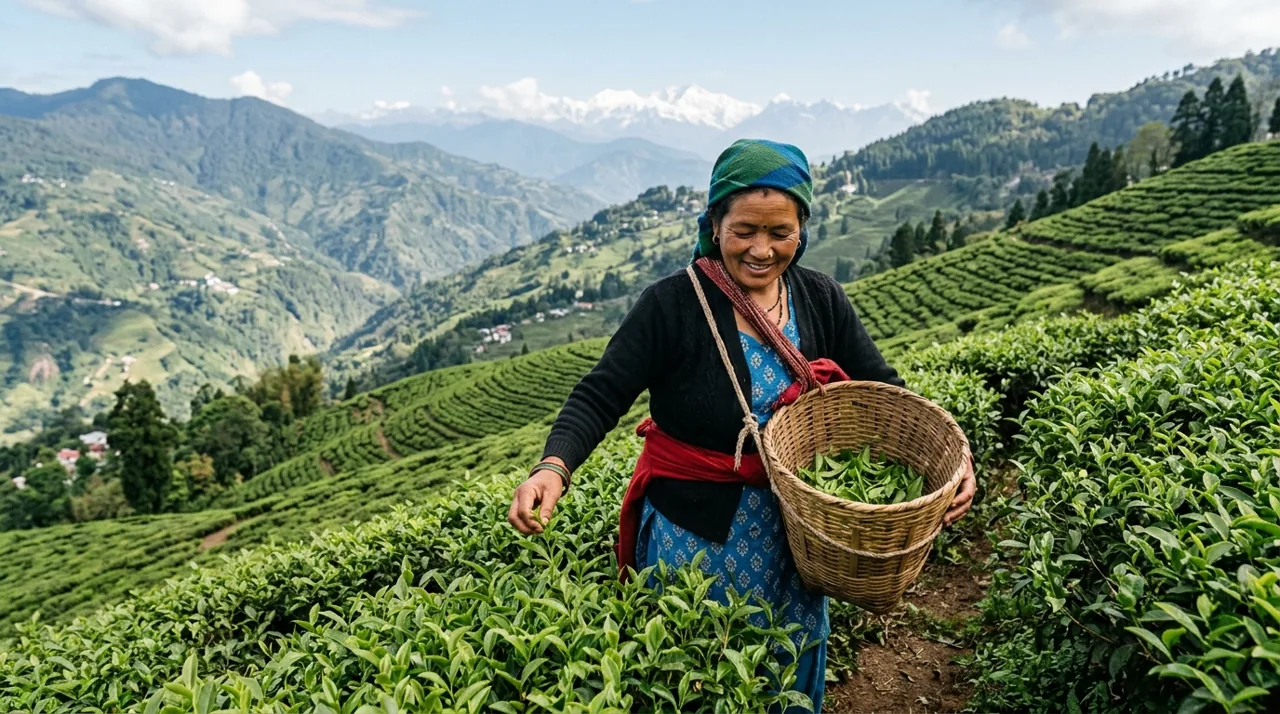
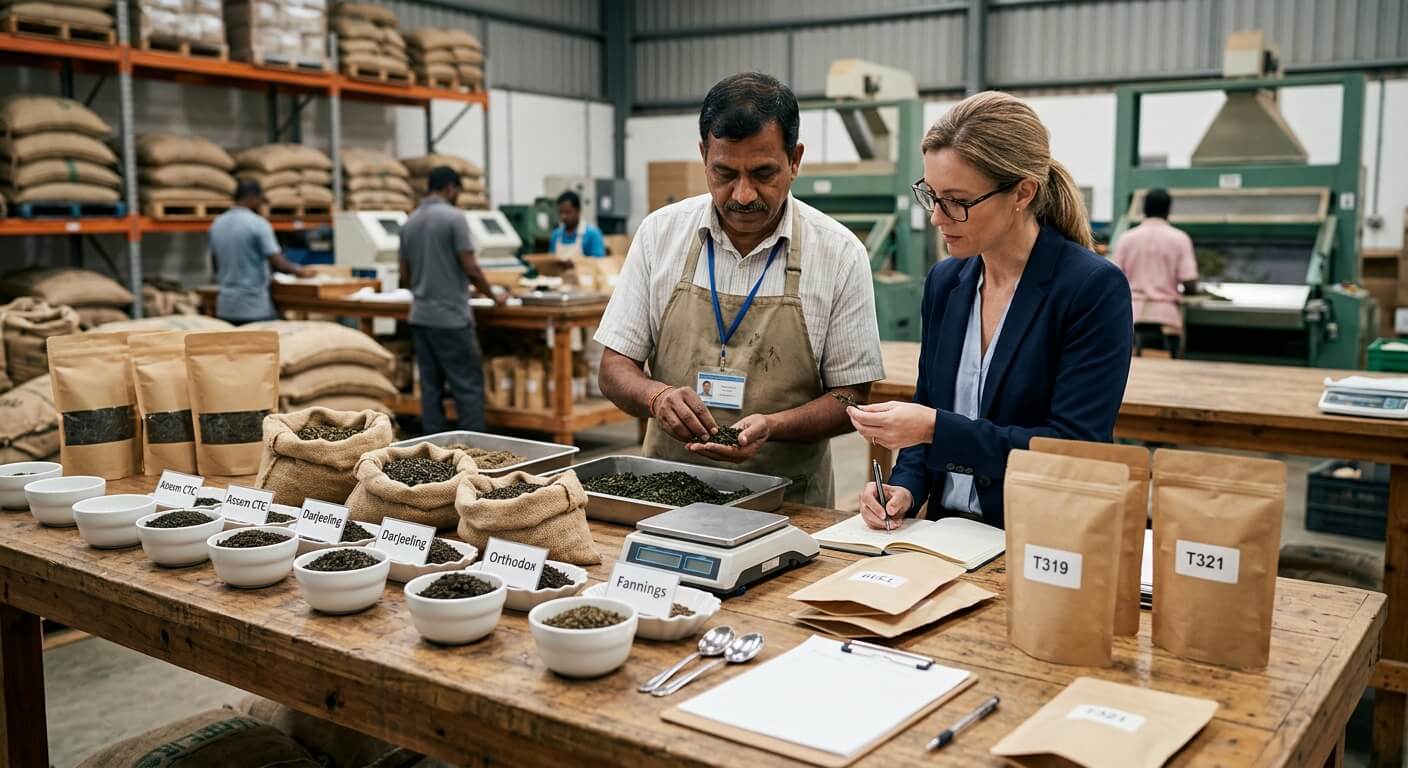
India’s tea-producing regions serve different buyer needs, and knowing which one matches your requirement matters before you request a sample. Darjeeling carries Geographical Indication (GI) protected status — grown at 600–2,000m elevation, with First Flush (March–April) commanding the strongest provenance premium in Indian tea. Assam is India’s largest producing region by volume, the backbone of most CTC and breakfast-blend bulk supply. Bihar is an emerging origin increasingly used for value-tier bulk and blending. Dooars, in West Bengal, is a full-bodied black tea used as a value-tier complement to Darjeeling and Assam lots.
You’ll also see two processing methods referenced constantly in supplier conversations: Orthodox (traditional whole- or large-leaf processing, associated with premium grading) and CTC — Crush-Tear-Curl — which produces the small, dense particles common in high-volume black tea for the bulk market.
The Import Process, Step by Step
- Discovery & requirements. Confirm your required tea type, origin, grade, volume, and target price point before requesting quotes — vague requirements produce vague quotes.
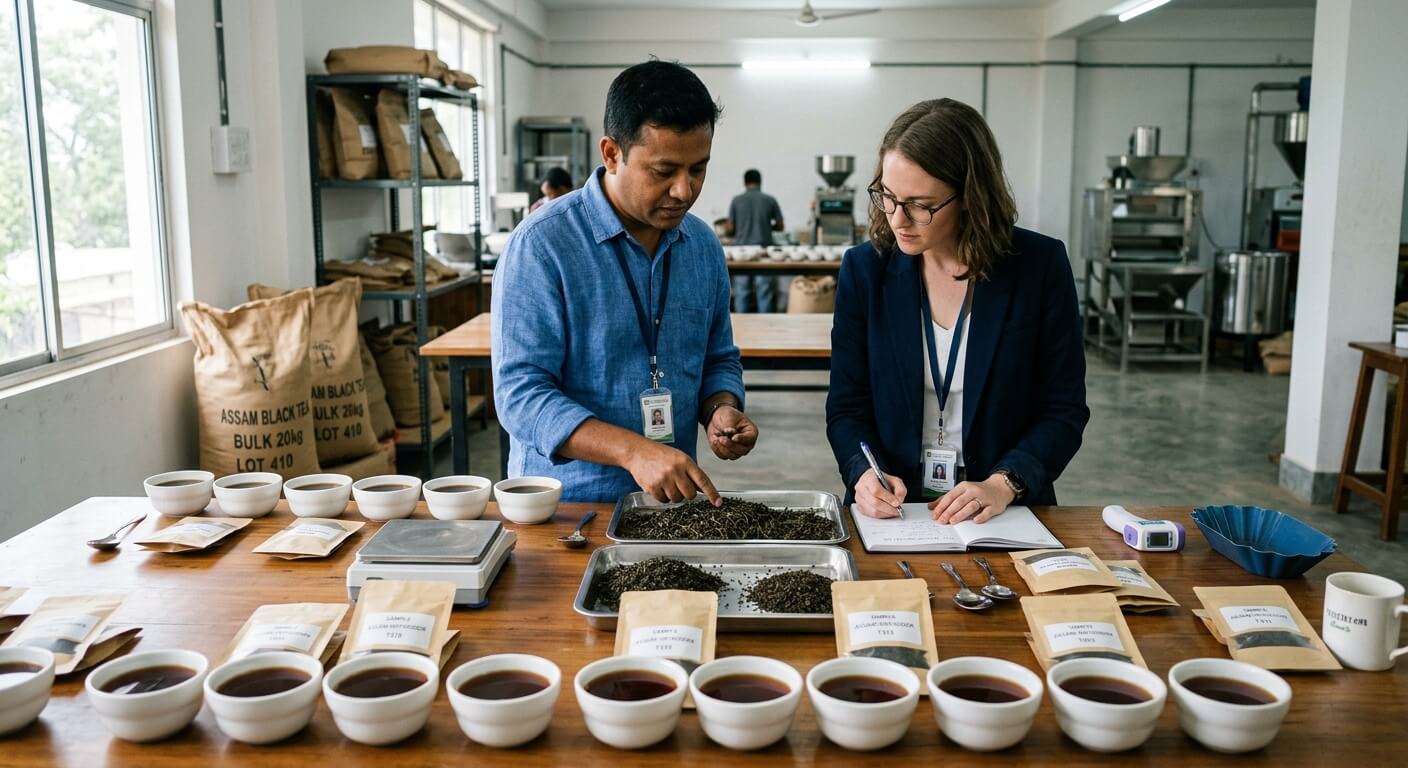
- Sample & grading. A credible supplier provides sample lots for evaluation against your own quality and grading standards before you commit to volume.
- Pricing & MOQ agreement. Confirm volume tiers, per-kg pricing, and minimum order quantities in writing. Pricing should scale down at higher volumes — if it doesn’t, ask why.
- Documentation. Certificate of origin, grading reports, and export documentation get prepared once terms are agreed — not scrambled together after the shipment is already booked.
- Fulfilment & ongoing supply. The order ships, and for recurring buyers, a supply relationship gets established so re-ordering doesn’t restart the whole evaluation process each time.
HS Codes and Customs Classification
Tea is classified under HS heading 0902 for customs purposes, with the exact subheading depending on tea type, processing, and your destination market’s tariff schedule — black tea shipments to the US, for instance, are commonly filed under subheading 0902.40.20. Confirm the precise code with your customs broker before shipment; misclassification, not the tea itself, is one of the more common reasons a shipment gets delayed at the border.
Certificate of Origin, Grading Reports & Phytosanitary Documentation
Ask your supplier for these before you finalize an order, not after:
- Certificate of origin, confirming the tea’s country and region of production.
- Grading reports, matching the batch to the agreed grade and specification.
- Third-party residue lab reports for the specific batch you’re buying — not a general catalogue-wide claim.
- Phytosanitary and export documentation, prepared as required by your destination market.
MRL Compliance — Why Pesticide Testing Matters
Western markets — particularly the US, EU, and Canada — enforce Maximum Residue Limits (MRLs) on pesticide traces in imported tea. These limits vary by market, tea type, and change over time, so treat any specific figure you’re quoted as time-sensitive, and confirm current thresholds with your customs broker or the destination market’s food safety authority rather than relying on a number from an old spec sheet. What matters more day-to-day is working with a supplier who partners with estates practising Integrated Pest Management or organic farming, and who can produce a pre-vetted third-party lab report — from a recognised lab such as Eurofins or SGS — for the specific batch you’re buying.
Registration & Clearance on the Indian Export Side
Your supplier should hold a Tea Board of India licence and a valid Importer Exporter Code (IEC) — the baseline registrations required to legally export tea from India. Depending on the specific product category, some shipments may also fall under APEDA’s regulatory scope. A supplier experienced in export compliance will know which registrations apply to your shipment and should be able to produce them without a lengthy back-and-forth.
No supplier can guarantee customs clearance on the receiving end — that decision sits with your destination country’s customs authority. What a good supplier controls is the preventable risk: accurate documentation, verified lab testing, and correct HS classification are what most customs rejections actually come down to.
Orthodox vs. CTC: Quick Reference
| Orthodox | CTC |
|---|---|
| Whole or large-leaf processing | Crush-Tear-Curl — small, dense particles |
| Associated with premium, specialty grading | Standard for high-volume, breakfast-blend bulk supply |
| Slower brew, more delicate flavour profile | Faster, stronger brew — common in tea bags |
India’s Central Board of Indirect Taxes and Customs (CBIC) publishes current HS code and customs guidance, while APEDA oversees agricultural export documentation.
Frequently Asked Questions
What documentation should I request before paying a deposit?
Certificate of origin, grading reports, and — for the specific batch you’re buying — a third-party residue lab report. Any supplier hesitant to provide these before payment is a signal to look elsewhere.
Can I get a sample before committing to a full container?
Yes — sample lots for evaluation are a standard part of the process and should be offered before you agree to volume, not after.
Is there a fixed minimum order quantity for import?
Wholesale and bulk orders are typically priced and scaled by volume rather than a single fixed MOQ. Share your target volume and market, and pricing tiers should follow.
How do I verify a supplier’s lab reports are legitimate?
Ask which lab issued the report — Eurofins and SGS are internationally recognised and independently verifiable — and confirm the report matches the specific batch and shipment date, not a generic document reused across orders.
If you’re ready to talk volume, grading, and pricing directly, see how Ricwell’s wholesale and bulk tea supply works.
Related Reading
- The Indian Tea Export Process, Explained
- MRL & Pesticide Limits: A Compliance Guide for Tea Importers
- Darjeeling vs. Assam Tea: What’s the Difference?
Ready to Launch or Scale Your Tea Brand?
Ricwell handles direct Darjeeling garden sourcing, retail-ready blending, custom packaging, and FSSAI/export compliance under your own brand name from 5kg low MOQs.